Trust your intuition.
It was a Sunday evening in late January 2025. I was in the shower when I felt something strange in my left breast. Something that didn’t feel normal. It felt like a medium-sized marble.
I remember stopping and checking again. That doesn’t feel right.
I texted my doctor the next day. She’s also a friend. She told me it was probably nothing, but to call the office and make an appointment anyway. I was in the next day. At that point, no one seemed overly concerned. My doctor said it was likely nothing, but wanted me to get a mammogram and ultrasound just to be sure.
But deep down, I already knew something was wrong.
I could tell by the way the radiologist acted. He said, “Normally we just say it’s nothing, see you back next year but we can’t say that here. We need you to get a biopsy.”
What made it even harder to process was that I had a normal mammogram just six months earlier.
The biopsy took time to get approved through insurance, and that waiting period was brutal. From the time I found the lump to the time I was officially diagnosed, it was about a month.
The biopsy appointment itself was one of the most emotional moments of my life. While the radiologist was doing the biopsy, I asked him if it looked okay. He said no. He told me I needed to prepare for the worst.
I lost it.
My boyfriend was waiting for me in the lobby, and when I came out, I couldn’t stop crying. We went to breakfast after, but I don’t even remember eating. I was too overwhelmed to think straight.
My son was in his first year of college, and all I could think about was how I was going to tell him.
When I did, he said something I’ll never forget, “Mom, you’re going to be okay. God is with us.”
At the same time, I was in the middle of trying to buy a new antique store, which thankfully did not happen, and I was still trying to function at my government job while carrying all of this privately.
From diagnosis to starting chemotherapy, it was about another month. I had no idea what to expect.
I live in a rural town in northern Arizona, and the medical options here are limited, especially when it comes to specialists. There was one well-known, highly recommended breast surgeon in town, and it felt like everyone went to her.
So I did too. That’s where I got the official diagnosis: stage 2B triple-negative breast cancer.
If you’ve read this blog for a while, you already know triple-negative breast cancer is aggressive and invasive. Hearing those words out loud is something I still can’t fully explain. I heard the doctor telling me I would need six months of chemo, surgery, and possibly radiation. There were more tests to schedule too: a PET scan, CT scan, bloodwork, and genetic testing for BRCA1, which I ended up not having.
Then chemo started, and life became a blur of weekly bloodwork, infusions, doctor appointments, trying to work, trying to keep some normalcy with my son and boyfriend, and somehow continuing to move forward.
Cancer is very inconvenient.
That may sound blunt, but it’s true. It doesn’t arrive at a good time, doesn’t wait for your schedule to clear. It doesn’t care what you were building, planning, or holding together. Cancer just shows up and forces its way into everything.
Still, I kept going.
Then after about eight weeks of chemo, I had a follow-up appointment with the original breast surgeon. During the ultrasound, she casually said, “Wow, I don’t see the cancer anymore.”
That should have felt like relief.
Instead, the conversation that followed left me frustrated, confused, and angry. She started talking about surgery options, saying it was time to think about whether I wanted a lumpectomy or a mastectomy. I asked what she recommended.
Her response was basically that my survival rate was about the same either way, and that I could go home and Google both options and decide what I wanted.
“Google it”. That was the guidance!
Then she made it sound like she would handle the cancer side, but anything involving the other breast would be up to me financially. And to top it off, she handed me a business card for a plastic surgeon she worked with.
I left that appointment livid.
I didn’t understand why something this serious was being presented so casually. I didn’t feel guided. I didn’t feel protected. I felt like I was being handed pieces of a decision I wasn’t equipped to make alone.
That appointment changed everything for me.
A friend of mine had recently gone through a double mastectomy with DIEP flap reconstruction. She told me something that ended up changing the course of my care:
You have to be your own advocate.
She told me to find a microsurgeon and plastic surgeon who specialized in these procedures. So I did. I began researching and found the surgeon.
He and his team performed these major surgeries all the time. I met with him, and I immediately knew this was different. He understood the bigger picture, and complexity. He understood the stakes.
Because the plastic surgeon handles the reconstruction and the breast surgeon performs the mastectomy, I also needed a new breast surgeon.
That meant a completely new team.
My plastic surgeon recommended Dr. Sigalove. He told me he had even sent his own mother to her.
That was enough for me.
I met with both of them, and they strongly agreed that with the aggressive type of cancer I had, a double mastectomy was the right choice, not a lumpectomy.
That was the moment I knew I had found my team.
This wasn’t a “go home and look it up online” kind of recommendation. This was clarity. This was experience. This was confidence. They worked together all the time. They did these surgeries together, regularly, as a team.
I trusted them.
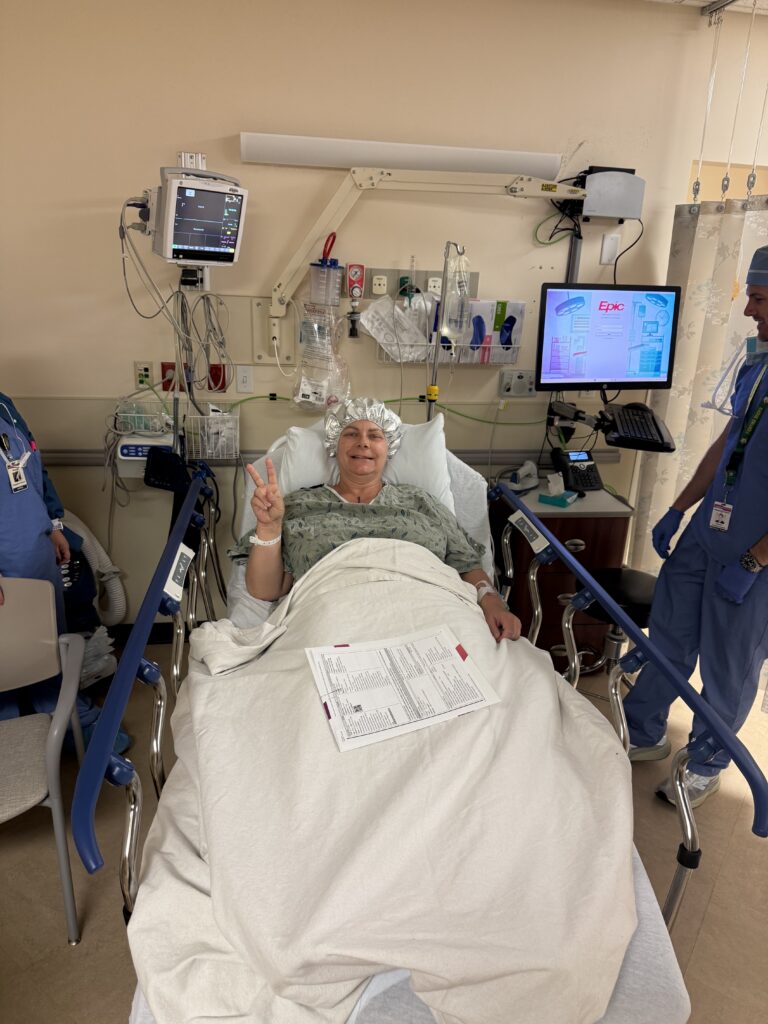
I had to wait six weeks after my last round of chemo for my body to recover enough for surgery. My last chemo was Red Devil, and by then, I was physically and emotionally exhausted.
But the morning of surgery, I felt something unexpected. I was nervous, yes. But I was also grounded.
I remember feeling like this was my chance to get rid of the cancer.
The surgery lasted nine hours.
When it was over, my doctor told my boyfriend that I was cancer-free.
I was in the hospital for four days. I had trouble keeping food down and needed more recovery time than expected, but I was up and walking the day after surgery.
And then, that Friday, just a few days later, I got another call. The pathology report showed one positive lymph node, which meant I needed radiation.
But that wasn’t all they found.
They also found pre-cancerous lobular cells in my right breast. The breast no one had been focused on, or checked through all of this.
The breast that could have brought me right back into another cancer fight later. And that hit me hard.
Because if I had gone with the original recommendation and only done a lumpectomy, that likely would have been missed.
I can’t even imagine.
There was another piece of this that mattered to me too: a lumpectomy would have required an implant, and I never wanted implants. No one had really asked me that. No one had slowed down long enough to understand what mattered to me physically, emotionally, or long term.
Again, I had to advocate for myself, and I had to ask better questions.
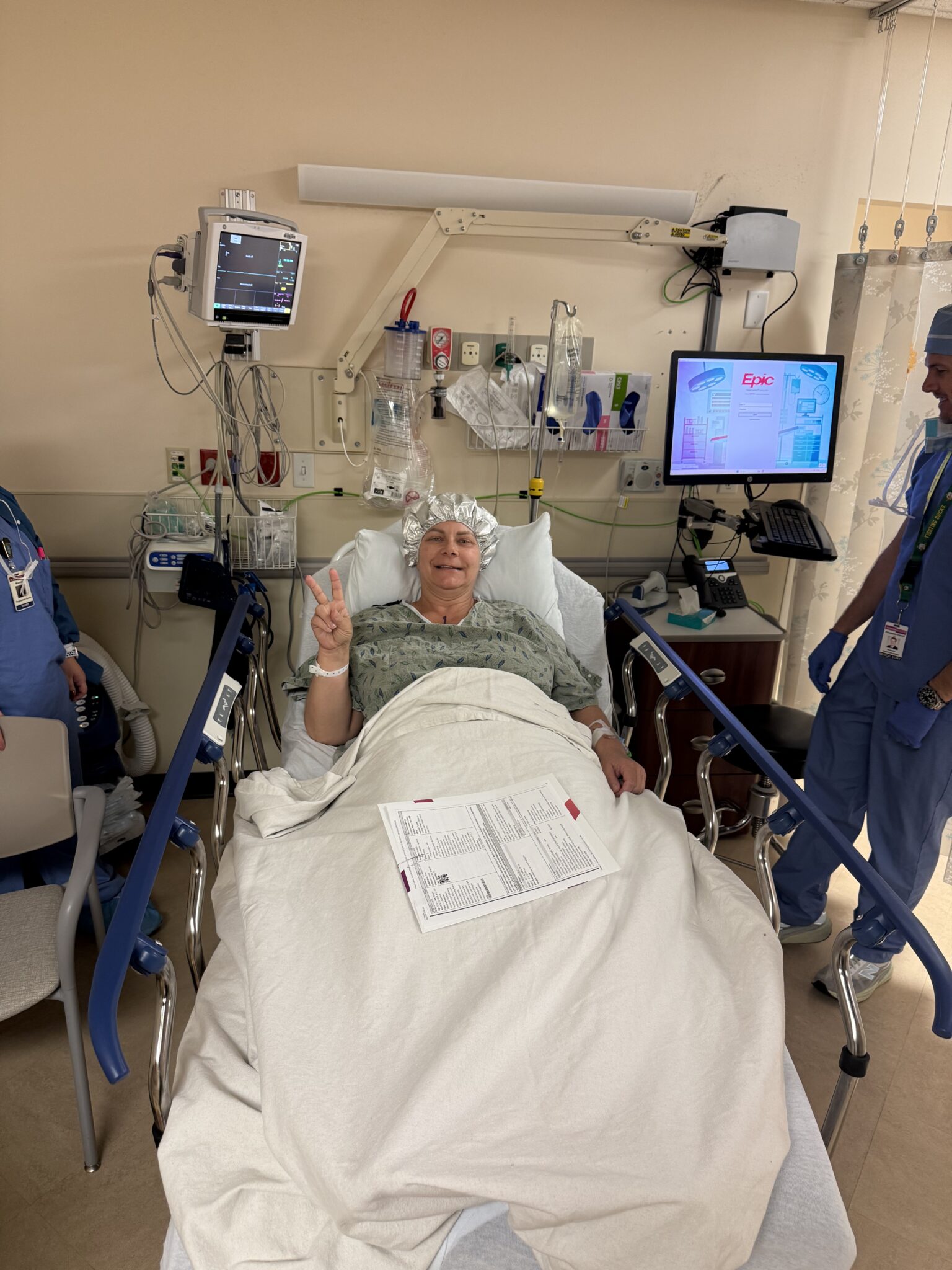
I had to listen to my gut, build the right medical team. I called them my A-Team. I remember them standing at the foot of my bed before surgery, and I knew I was exactly where I needed to be.
That is why I’m telling this story. Not because I enjoy reliving it or want sympathy.
But because I know there are women out there right now sitting in confusion, fear, frustration, and information overload.
And I want to say this clearly:
You have to be your own advocate.
If something feels off, pay attention. If you don’t feel heard, get another opinion. If the recommendation feels too casual for something this serious, keep looking.
Listen to your gut.
Mine was right the night I found the lump, when the first treatment plan didn’t sit well with me. Mine was right when I knew I needed a different team.
And hold on to faith.
Faith carried me through some very dark moments. When I didn’t know what was next. When I was crying in a lobby.
When I was trying to tell my son. When my body was exhausted. When I needed peace before surgery. Faith did not erase the fear.
But it gave me something stronger to stand on.
It has now been about six months since my non-nipple-sparing double mastectomy with DIEP flap reconstruction, and I’m doing pretty well.
My next step is scheduling the next phase: nipple reconstruction and tattooing, so I can feel a little more like myself again.
But even now, after everything, what stays with me most is this:
I had no idea how strong I was until I had no choice but to find out.
The strongest person I didn’t know was me.
And if you’re in the middle of your own fight right now, maybe her name is you too.